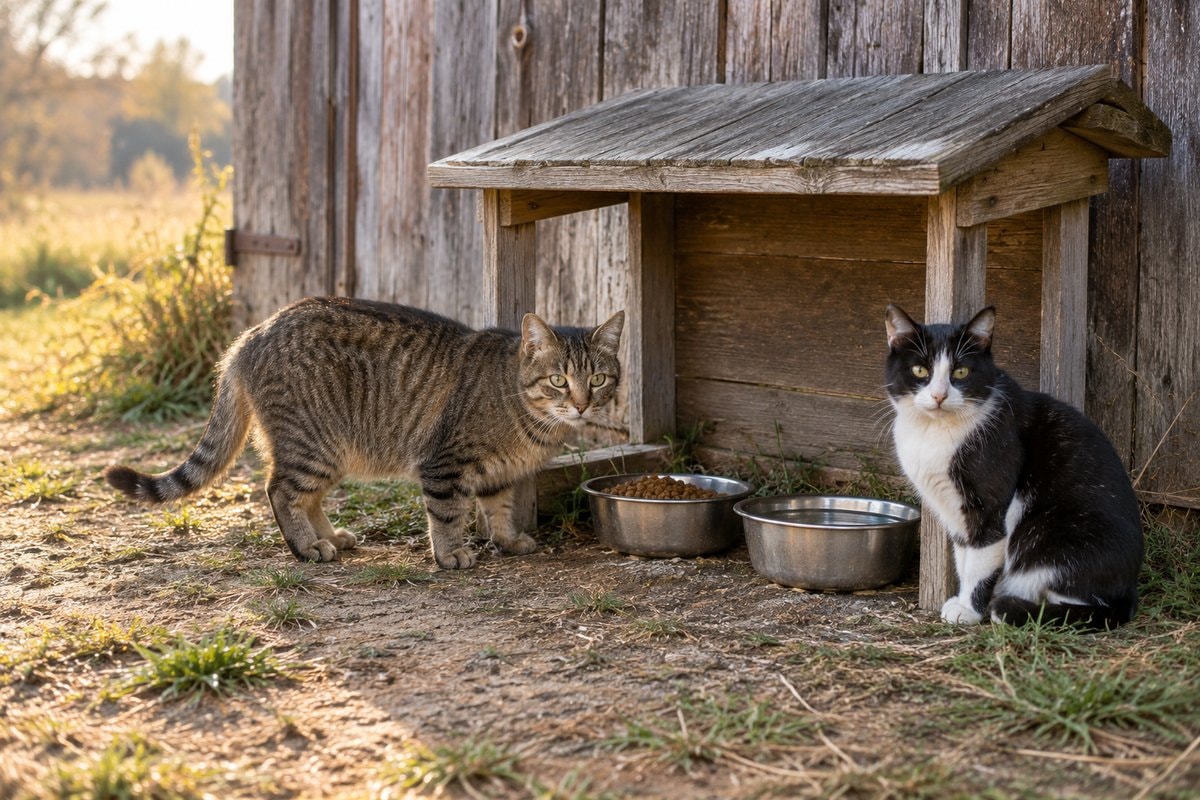
Seeing cats living outdoors raises questions that should be considered together: whether an animal has a home, how comfortable it is around people, what care it needs and what its surroundings can support. Do not assume that every outdoor cat is unowned or that every frightened cat is feral. Ask local animal services or a rescue experienced with outdoor cats how to assess the situation. If adoption is appropriate, contact a shelter or rescue directly to discuss it.
Feral, stray and community describe different things
Wikipedia's feral-cat reference explains that the terms vary across settings. It distinguishes stray cats, which may have wandered away from homes, from feral cats, which generally avoid human contact and handling. Community cat is also used for outdoor cats, but the word does not settle ownership, socialisation or the right arrangement for the animal. Ask what a local programme means when it uses a particular term.
Describe what you have seen without deciding the answer in advance. Note where the cats appear, whether they approach people and whether a caregiver is already involved. Ask the local service how to check for an owner and how an animal can be assessed. A frightened response in an unfamiliar situation should prompt careful enquiry, rather than a hurried label.
The microchip and lost-pet guide explains identification questions that belong in this process. Do not move an animal into an adoption arrangement before the responsible organisation has considered whether it may be a missing pet. Keep the information clear enough that other caregivers can follow the same plan.
What trap–neuter–return involves
Wikipedia's article on trap–neuter–return describes live-trapping outdoor cats, veterinary sterilisation, ear-tipping for identification and vaccination where possible, followed by return outdoors. It also describes adoption pathways for friendly adults and kittens that can be socialised. The article presents TNR as a controversial approach to managing free-roaming cats. Understanding the process is different from assuming it is appropriate in every place.
Ask an experienced programme about veterinary appointments, safe handling, care around surgery and responsibility afterwards. Do not begin trapping on the assumption that a clinic or rescue can immediately take the animals. Agree the arrangements first, including what happens if a cat needs additional assessment. A veterinarian should make health decisions and explain the care required.
Return should be part of a considered plan, rather than an improvised end to an appointment. Ask how the site is assessed and what ongoing monitoring involves. If people disagree about the location, feeding or responsibility, address those concerns through the relevant local service before proceeding.
The evidence debate matters
The TNR reference reports that scientific research has not found the method effective for controlling feral-cat populations. Its review of colony declines explains that changes can involve permanent removal through rehoming or other means, as well as death and disappearance. It also discusses cats arriving from elsewhere and sterilisation efforts that do not keep pace with breeding. A smaller colony after a programme therefore does not establish that sterilisation and return alone caused the change.
The article describes supporters emphasising care for cats and limits on reproduction, while opponents raise concerns about wildlife and whether populations actually decline. Keep those different aims visible when evaluating a local proposal. Ask what the programme intends to achieve, how it monitors the cats and what evidence it uses to assess progress. Do not accept a guaranteed outcome without an explanation.
Compassion for cats can sit alongside attention to wildlife and the suitability of a location. Ask how the local plan addresses those concerns rather than treating them as unrelated arguments. A useful discussion should include the animals' ongoing circumstances, the wider surroundings and the practical capacity for continuing care.
Local programmes and Maryland grants
A county's animal-services guidance includes a trap–neuter–return programme and a working-cat programme among its services. That is an example of local involvement, rather than proof that every county offers the same arrangements. Check the service's own site for current details. Ask what help exists in your area and which responsibilities remain with the caregiver.
Maryland's Spay and Neuter Grants Program describes grants to local governments and nonprofit animal-welfare organisations, including a grant opportunity for unowned or feral cats. It states that funding is not provided directly to individuals. A caregiver should check the recipient programmes and ask about their current eligibility and arrangements. Do not assume an individual grant is part of the process.
The guides to spay and neuter and Maryland shelters and rescues place these services in a wider context. Ask who coordinates the veterinary care, who keeps records and how new or unwell cats are brought to professional attention.
Barn placements still require responsibility
The feral-cat reference describes rescue programmes that place neutered cats in barn settings. A working-cat arrangement should be discussed with the organisation managing it. Ask what makes the location appropriate, how the move is organised and what care the household must continue. An outdoor placement should never be an excuse to leave an animal without an agreed caregiver.
Ask about shelter, feeding, monitoring and access to veterinary assessment. Explain the property and the time you can give honestly. Whether the discussion leads to a return, an indoor adoption assessment or a barn placement, responsibility should remain clear. Seek a coordinated arrangement that considers the cat, the site and the continuing work required.