Training a rescue dog is part of learning to live together. Start with the skills that make ordinary days manageable: resting while the household is busy, walking with you and finding the usual toilet area. Avoid assuming that an adult dog knows your cues or rules. If adoption is still being considered, contact a shelter or rescue directly and ask about the dog's routines and any behaviour support needed.
Begin with an understandable routine
Decide what the dog needs to learn first and make the setting manageable. Use a quieter part of the home for early practice, put tempting belongings away and plan rest as well as activity. Keep cues consistent across the household. If a dog is expected to wait at a doorway, everyone handling that doorway needs to follow the same agreed approach.
Wikipedia's dog-training reference describes reward-based training as reinforcing wanted behaviour. Look for useful moments you can acknowledge: the dog settling on its bed, returning attention to you or keeping its paws on the floor. Choose a reward the dog enjoys and can receive safely. Ask a veterinarian about food choices if health or dietary needs are involved.
For early sessions, choose a modest task and stop while the dog is still engaged. If the dog becomes distracted, consider making the setting quieter or the task easier. Repeating a cue louder is not a substitute for teaching its meaning. The first-weeks guide helps place practice within a predictable arrival routine.
A marker makes the timing clear
Wikipedia's reference on clicker training explains how a click or another chosen signal marks a wanted action and connects it with a reward. The useful part is the timing: the signal identifies the moment you want the dog to repeat. A consistent brief word can also serve as a marker; equipment is not the central issue.
Learn to use the marker with help if its timing feels awkward. Begin where it is easy to notice the action, and follow the signal with the reward. Do not click repeatedly to get the dog's attention or use the sound as a reprimand. Watch whether the dog is comfortable with the sound and ask a qualified trainer about a suitable alternative if it is not.
Introduce a crate without pressure
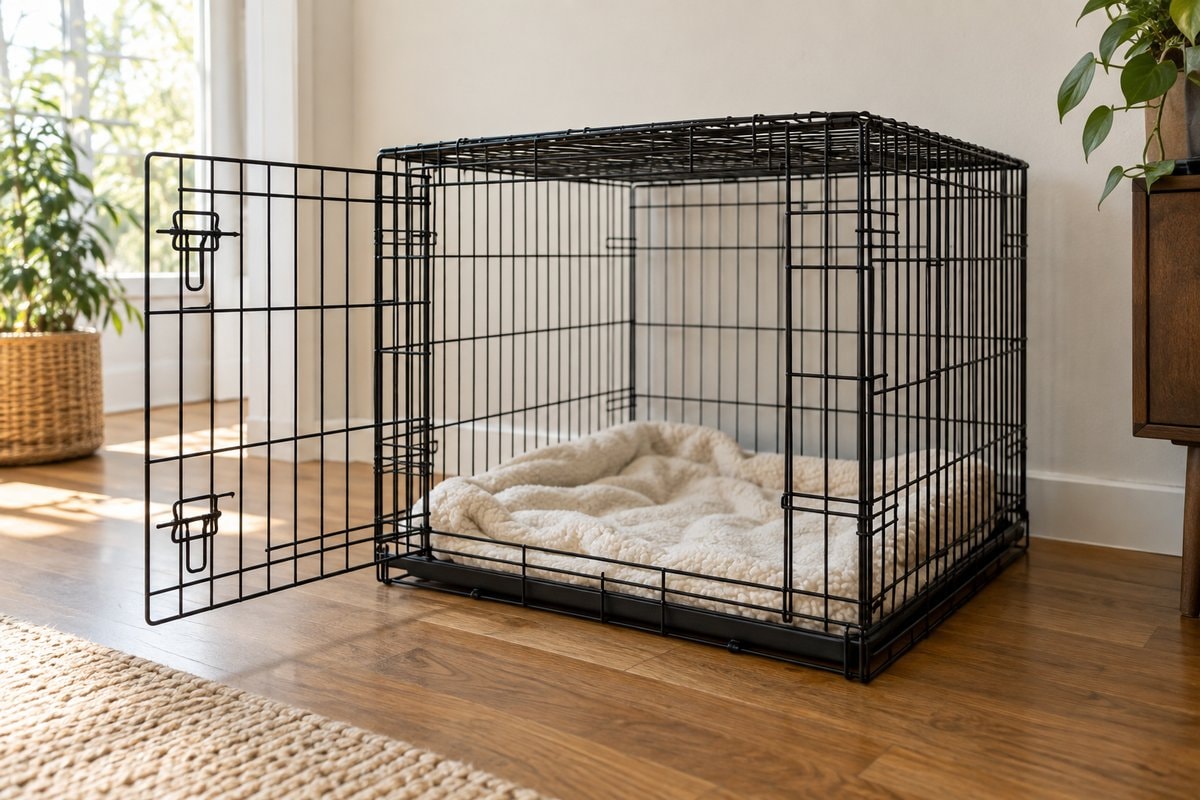
Wikipedia's crate-training reference describes gradual introduction and warns about excessive confinement. Set the crate in a comfortable location and make voluntary entry worthwhile. Allow the dog to investigate an open doorway before expecting it to stay inside. Ask a trainer or veterinarian to help decide whether a crate suits the dog and your circumstances.
The reference says the dog should have room to stand, stretch and turn comfortably. It also cautions that trying to force adjustment through prolonged barking or escape attempts can build a negative association. A crate should not be punishment or a way to avoid arranging exercise, toilet outings and companionship. Distress calls for a different plan and appropriate help.
Teach the toilet routine again when needed
Wikipedia's house-training reference notes that an older dog may need renewed supervision and teaching in a different home. Establish a predictable route to the toilet area, accompany the dog and reward the wanted result. Learn the pattern around waking, eating, play and rest instead of expecting the dog to understand the new house immediately.
Supervise the dog where practical and keep access to the home manageable while learning its routine. If an accident happens, clean it and review what preceded it. The house-training reference cautions that punishment can increase confusion and anxiety. Do not scold after finding a mess. Ask a veterinarian about unusual or changing toileting, rather than assuming every accident is a training problem.
Practise walks before making them demanding
Ask the rescue what lead equipment and walking routine the dog already knows. Have fit and handling checked by someone qualified when uncertain. Begin in a setting you can manage, reward attention and change direction calmly rather than pulling the dog into a confrontation. Consider a quiet route before attempting busy entrances, narrow paths or crowded gathering places.
If another animal or person is making the walk difficult, create more distance and get advice. A walk need not include greeting every dog or stranger. Read about introducing pets and children before arranging close interactions. Keep practice separate from situations where the household cannot safely manage the dog.
Alone-time distress needs a careful assessment
The ASPCA's separation-anxiety guidance describes distress associated with being left alone, including persistent vocalising, pacing and escape attempts. It advises ruling out medical and other behaviour problems and avoiding punishment. Wikipedia's separation-anxiety reference also warns that similar signs can have other explanations. A veterinarian should assess concerns; a damaged door or toilet accident alone does not supply a diagnosis.
The ASPCA describes carefully graduated absences that remain within the dog's comfort and recommends experienced professional guidance for more complex cases. Ask for help designing that plan instead of extending absences until the dog becomes distressed. Arrange suitable company when needed while seeking advice. A frightened dog should not be left to struggle through a long absence as an exercise in learning.
Choose help that explains its methods
Ask a prospective trainer how reward-based teaching will be used, how signs of fear will be handled and when veterinary input is needed. Explain any concerning behaviour fully. Goals should be practical and suitable to the dog, with an approach you can carry out consistently. If safety is uncertain, organise separation and professional advice before further practice.
For an adoption decision, the rescue-dog starting guide helps turn behaviour concerns into questions for the organisation. Training is an ongoing conversation between observation, clear teaching and patient adjustment. Notice small useful changes while keeping expectations grounded in daily life.