Introducing a new pet begins before the animals meet. Explain your household to the shelter or rescue: resident pets, children, visitors and the spaces you can separate. Ask what is known about the new animal and what has not been assessed. Agree a plan that leaves room to pause. If you are still choosing an animal, contact a shelter or rescue directly for a discussion of compatibility rather than assuming a description guarantees an easy introduction.
Make separation workable first
Decide where each animal can rest, eat and spend time without being approached by another pet. Check doors, barriers and access routes before arrival. Make sure the arrangement is practical while adults are cooking, working or taking care of children. A plan that depends on constant improvisation is difficult to follow. The home safety guide helps you consider the everyday use of those spaces.
Ask the rescue and veterinarian what should happen before animals share an area. Bring questions about health records, handling and any known concerns. Do not use an introduction to test an uncertain claim about compatibility. If the new animal has not lived with a particular kind of pet, say that information is missing and plan accordingly.
Tell everyone in the household which doors should remain closed and who is responsible for checking them. Have a calm way to separate animals without reaching between them. Ask the rescue for help with that arrangement if you are uncertain. Preparing the space allows a slower decision about meetings.
Let dog meetings stay manageable
Discuss a dog-to-dog meeting with the rescue before bringing the new dog into the resident dog's home. Ask whether an initial meeting on neutral ground is suitable and who should help. Arrange enough room to move apart, with capable adults following the same instructions. Avoid crowded entrances, forced contact or a meeting arranged simply because everyone is eager.
Wikipedia's dog-training reference describes reward-based learning and the importance of interpreting body language and managing the environment. Ask a qualified trainer or the rescue how those principles apply to the dogs involved. Reward the calm actions you want to encourage and keep the situation within the animals' ability to manage it. Do not make punishment the response to uncertainty.
Ask the helper to explain when a meeting should pause: for example, if a dog stiffens, repeatedly tries to move away or cannot disengage from the other animal. These observations need context, rather than a quick personality judgement. Explain exactly what happened and follow the professional guidance about the next step. The rescue dog training guide connects introductions with broader daily routines.
Give cats a room and a slower approach
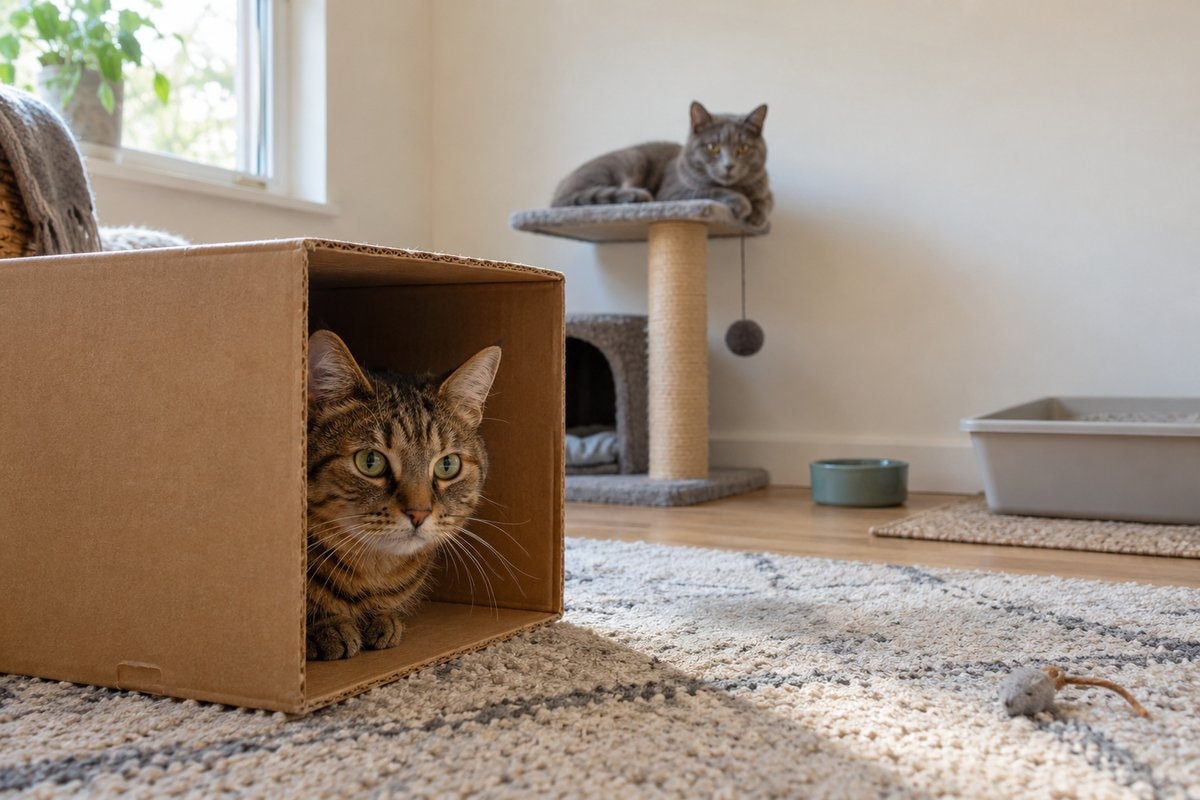
Prepare a quiet room for a new cat, with its own resting place, food, water and litter arrangements. Ask the rescue which familiar routines to keep. Allow the cat to use that space without a resident animal waiting at the doorway. Discuss the next step when you can describe how the cat is managing ordinary activity there.
Wikipedia's cat-behaviour reference explains the role of territory and scent. In its discussion of difficult introductions, it describes separating cats and introducing scent on towels gradually. Ask the rescue how to use scent swapping within a plan for your household. Sharing a scent is a step to discuss, rather than permission to open every door immediately.
The reference describes hissing as defensive communication and a tucked tail as a sign of fear or unease. It also explains that ears and posture contribute to communication. Look at the situation as a whole and give a worried cat space. Do not pull a hiding cat out for a meeting or hold it in place while another animal approaches.
Keep dog-and-cat introductions controlled
Ask the rescue what is known about the dog's response to cats and the cat's experience with dogs. Describe the layout of your home and where the cat can withdraw. Plan supervision and separation before a meeting, including what happens when an adult needs to leave the room. Avoid letting an animal chase another in order to see whether they will eventually settle.
If a meeting does not go smoothly, separate the animals and seek advice. Record the distance, setting and behaviour you observed. Do not force the same encounter again because a previous description sounded encouraging. Reconsidering the plan is part of responsible care. The guide to choosing a suitable pet helps keep household fit in view.
Teach children how to give space
Adults should supervise contact and manage the surroundings, rather than asking children to recognise every warning signal. Explain that an animal's sleeping place, food area and hiding place are spaces to leave alone. Keep greetings calm and let the animal move away. Ask children to wait for an adult before touching or approaching the new pet.
Teach gentle behaviour through practical rules: no chasing, crowding, grabbing tails or picking up an animal without adult guidance. Show how to play without pushing into the animal's space. If either the child or pet is overwhelmed, end the interaction calmly. A quiet pause is more useful than insisting that affection should make every meeting work.
Keep observing after the introduction
Watch how the household routine works once the first meetings are over. Wikipedia's reference on separation anxiety in dogs describes distress connected with a caregiver's absence and cautions that medical or other behaviour concerns can look similar. An introduction does not answer every question about settling at home. Bring distress or marked changes to a veterinarian and ask the rescue for continuing support.
Keep separate spaces accessible while the plan develops. The first weeks at home guide helps organise that adjustment. Progress should follow what the animals can manage and what the household can supervise, with help sought whenever the arrangement becomes unclear or unsafe.