Pet-proofing works best as a household routine, not a shopping exercise. A closed cupboard, a predictable door habit and a resting place away from busy feet can matter as much as new equipment. Before a rescue pet arrives, walk through the home from the animal’s likely height and notice what can be reached, chewed, climbed into or pushed open. Then discuss who will maintain those arrangements when everyone is busy.
Contact a shelter or rescue directly when adopting and ask what the animal’s current caregiver has noticed about escape attempts, chewing or access to household items. A foster may know that a dog explores kitchen bins; a shelter may have limited observations from a home. Treat gaps as things to plan for rather than assuming an unfamiliar animal will leave every object alone. The guide to the first days and weeks puts household preparation into the wider arrival plan.
Start with the route out of the house
Review front and back doors, gates, window openings and any route to a shared hallway or garden. Decide where the pet will be when deliveries arrive or furniture is carried through an open door. A spoken reminder may be forgotten in the rush, so make a physical separation part of the plan where appropriate. Check that everyone who uses the entrance understands the routine, including visitors who are unfamiliar with the animal.
Look at garden boundaries from close by. A gate that usually stays shut may have a loose latch; a fence may have a gap behind a shrub. Keep the dog supervised while learning what the space is like. For cats, examine screens and window fittings rather than assuming they will hold if a curious animal presses against them. Ask the organisation how it recommends managing outdoor access and the initial adjustment.
Keep the carrier, lead and identification arrangements ready before the move. An unfamiliar pet may move quickly when a door opens or a surprising sound occurs. The identification and lost-pet guide explains registration and the practical preparations that belong alongside careful door management. Do not allow the presence of a tag or chip to replace attention to the surroundings.
Make kitchen habits predictable
The ASPCA’s guidance on people foods to avoid feeding pets includes alcohol, raw yeast dough, chocolate, coffee and caffeine, grapes and raisins, onion, garlic, chives and xylitol among its concerns. Keep those foods and ingredients where the animal cannot reach them, including leftovers and rubbish. This is a selection from that guidance rather than a complete assessment of every food in your kitchen.
A closed bin and cleared worktop are easier habits to maintain when the whole household agrees on them. Ask visitors not to offer food without checking with the caregiver. Put baking ingredients away when you leave the room and consider where bags of groceries wait before unpacking. A kitchen chair pushed against the counter can become an access route, especially when the animal is comfortable exploring.
For a suspected poisoning, contact a veterinarian at once and explain what may have been eaten or encountered. Keep packaging or a clear description for the veterinarian to assess, without delaying that conversation. Do not improvise a home response or wait for a particular sign before asking for help. Professional advice needs the actual circumstances, and a general food list cannot decide what an individual exposure means.
Look beyond food
Review loose cords, dangling blind cords, cleaning supplies, small objects and anything the animal can swallow or pull down. Choose storage that remains closed rather than placing an item on a surface you hope is high enough. When tidying, include the spaces under furniture and behind appliances that a curious pet may reach. Check again after visitors, craft activities or household repairs change what is left within reach.
Ask a veterinarian about any plant or household substance you are uncertain about before the pet has access to it. Do not assume that a decorative plant is suitable because it is common in homes. Put maintenance materials, tools and cleaning equipment away between uses. If a room cannot be made ready immediately, close it off and make the boundary clear to everyone in the home.
Give rest and daily care their own places
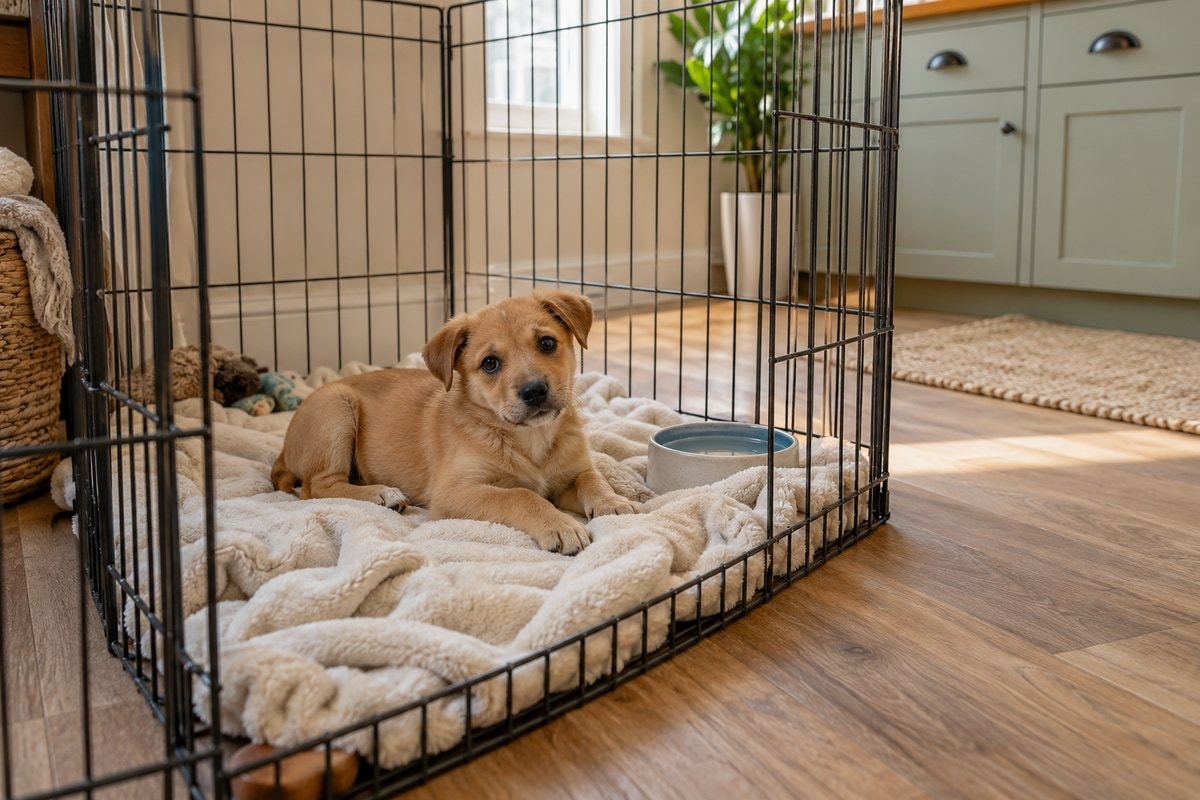
The ASPCA’s general dog-care guidance describes a warm, quiet resting place and clean bedding. Choose a location where the dog can rest without a constant stream of people passing close by. A bed beside the doorway may be convenient for you while remaining busy for the animal. Think about floor grip, stairs and access to water if the dog has mobility needs, then ask the veterinarian about the individual situation.
The ASPCA’s general cat-care guidance recommends a clean resting place, an accessible quiet litter-box location and a stable scratching surface. A suitable cat room needs more than a shut door: it needs useful places to rest, hide, scratch and use the litter tray. Check cardboard boxes for unsuitable loose pieces and keep the room’s fittings secure. Revisit the arrangement as the cat explores rather than moving everything without a reason.
Bowls, leads, bedding and toys also need positions that work for people moving through the room. Leave ordinary walking routes clear and tidy equipment after use. If household mobility or falls are a concern, discuss that with a health care provider and use the people-and-pets topic in the site index for general research reading. Household organisation is a practical responsibility rather than a medical guarantee.
Supervision is part of the arrangement
Provide separation from resident pets while introductions are planned. Do not leave animals together because an early meeting looked calm. Keep play and food areas manageable, and supervise children around the new pet. The guide to introductions considers those boundaries in more detail. A resting animal needs space even when someone wants to show affection.
Review the home after the pet has settled enough for you to see its habits. Notice what the animal reaches for, where it rests and which entrances draw its attention. Share concerns with the shelter or rescue and bring health questions to the first veterinary visit. A practical safety plan can change as you learn more, while keeping responsibility for daily supervision clear.