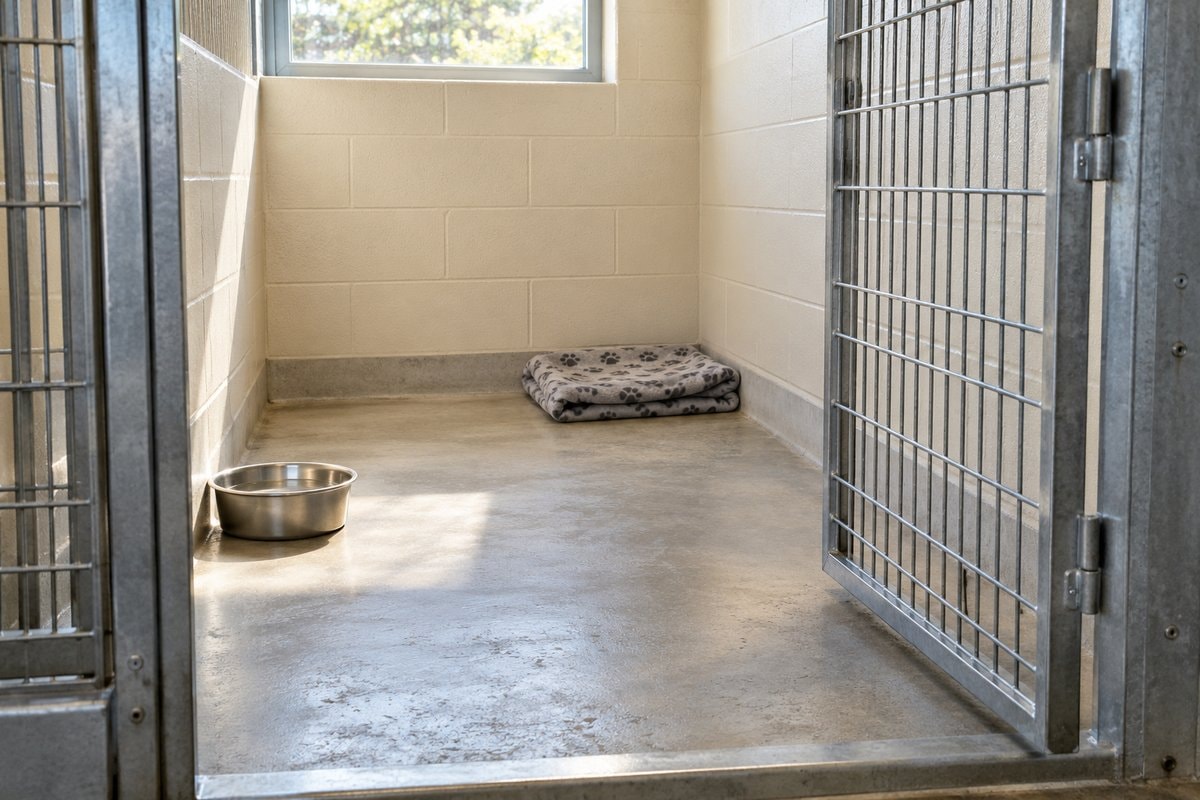
A dog coming from neglect needs a home chosen for its present needs, not only for the circumstances it has left. Ask what is known about daily care, handling and ordinary household experiences. Some information may still be uncertain, and a compassionate decision needs to make room for that uncertainty. Contact a shelter or rescue directly to discuss adoption and the support expected after the dog moves into a home.
Different circumstances can leave different needs
Wikipedia's reference on animal hoarding describes situations in which the animals kept exceed the caregiver's ability to provide appropriate care, with that inability not acknowledged. It explains that the issue is the failure of care, rather than the animal total alone. The relevant questions for an adopter concern the dog's condition and observed needs; a general label does not supply those answers.
Wikipedia's reference on puppy mills describes commercial breeding associated with poor conditions and an emphasis on output over the dogs' welfare. Its account includes inadequate veterinary care, limited enrichment and lack of ordinary social contact. Dogs from prolonged confinement may need assessment of experiences they have not had, as well as the care they missed. Ask the rescue what has actually been observed.
Do not assume all dogs from the same situation will behave alike. A history can help guide questions without becoming a script for the dog's future. Ask how the organisation distinguishes documented information, current observation and a cautious estimate. Avoid adding a detailed story where the record leaves gaps.
A large removal is the start of practical work
Wikipedia's hoarding reference describes pressure on shelters and animal-care organisations when many animals need attention together. Assessment, appropriate housing and veterinary care require resources and coordination. The fact that animals have left the neglectful setting does not mean their needs have been fully understood or that adoption should happen immediately.
Ask where the dog is currently living and who can describe its routine. Find out which veterinary checks have been completed, which questions remain open and whether observation in a foster home has taken place. If the organisation cannot yet explain the likely care tasks, ask how further information will be obtained before an adoption decision.
Discuss timing with the rescue instead of treating urgency as the only consideration. A household may be able to help best by choosing a dog whose needs it can sustain, or by waiting until a clearer assessment exists. A good match should not depend on overlooking a concern that will still need attention at home.
Ask about everyday experiences
Request examples of the dog's response to doors, floor surfaces, lead handling, grooming and human proximity. Ask what routine is currently working for toileting and rest. Find out whether the dog has been observed around other animals and how those observations were managed. A brief general description cannot replace this conversation.
Wikipedia's puppy-mill reference describes social and behaviour difficulties associated with limited socialisation, enrichment and positive contact. That information does not establish a fixed outcome for a particular dog. Household planning should follow the rescue's observations and professional advice, with the possibility that some ordinary activities will need a careful introduction.
Read choosing a pet for your household before deciding how much change your home can accommodate. Consider noise, visitors, resident animals, time without company and who can handle care if progress is uneven. Be candid about experience and limits rather than presenting a household that exists only in intention.
Organise veterinary care and grooming advice
Ask for the veterinary records and a clear explanation of continuing care. Bring them to your veterinarian and describe any changes noticed after arrival. The guide to the first vet visit can help organise that conversation. A history of missed care is a reason for professional assessment, not a basis for making a diagnosis yourself.
Discuss grooming and handling with the rescue and appropriate professionals, especially if the dog has difficulty accepting touch. Ask what has been tried and what the dog currently tolerates. Avoid making bathing, coat care or close examination an intense homecoming event. The safe way to carry out necessary tasks should be demonstrated and adapted to the dog.
Make the household introduction gentle
The Wikipedia reference on rescue groups explains that adjustment after severe mistreatment differs among animals and that some may retain difficulties. There is no dependable universal timetable for this household decision. Ask the organisation and professionals what changes they would like reported and what expectations are reasonable for the dog being considered.
Prepare a quiet resting place and begin with a routine that can be repeated. The first-days and first-weeks guide helps organise arrival. Give the dog room to approach and keep introductions manageable. Avoid attempting to compensate for missed experiences by presenting visitors, outings and new handling tasks all at once.
Use patient, reward-based teaching for household skills and ask for help if the dog becomes frightened or difficult to manage safely. The page on training a rescue dog includes toileting, crate introduction and concerns about time alone. Training expectations should be suited to what the dog can presently manage, rather than an imagined pace of progress.
Agree on support before the move
Ask whom to approach within the organisation for questions, what support it can offer and when it expects veterinary or qualified behaviour input. Read the adoption and return terms carefully. Make a backup care plan with someone who understands the routine, rather than assuming any willing friend can manage unfamiliar care tasks.
Keep observations simple and useful: the setting, what happened and whether the response changed. Hope can coexist with honest limits. The objective is steady, informed care and a home that can respond thoughtfully to the dog's needs, including asking for help when the plan needs adjustment.